

Customers ask us about TAC at the counter almost every day. Usually it’s some version of: “Why is the TAC number higher than the THC percentage?” Fair question, the labels can be confusing if no one explains them. TAC stands for Total Active Cannabinoids. It’s the sum of every cannabinoid in the flower or product, not just THC. So if a strain has 22% THC plus 1% CBG plus a few tenths of a percent of CBN, CBC, and a handful of other cannabinoids, the TAC ends up at around 24%. Higher than the THC line because TAC counts everything.
Want to see how TAC plays out across our menu? Stop into a Cannabis & Glass, or stop in and the Cannabis & Glass budtenders will walk you through what the numbers actually mean.
Why Labels Started Showing TAC
For a long time, Washington labels mostly highlighted THC percentage. As the science around minor cannabinoids and the entourage effect got more attention, growers and labs started reporting the full cannabinoid panel. TAC gives you the bigger picture, what’s actually in the jar, not just the THC line.
Is TAC the same as potency? No. TAC is total cannabinoid content. Potency for most people maps to the THC line, not TAC.
TAC vs THC%: What’s the Difference?
THC% is just the THC content. TAC includes THC plus every other detectable cannabinoid: CBD, CBG, CBC, CBN, THCV, and the minor ones. Two products can have the same THC% but very different TAC numbers depending on what else is in there. Example: a flower at 22% THC and 1% CBG and 0.3% CBN has a TAC around 23.3%. A different flower at 22% THC and nothing else detectable has a TAC of 22%. Same THC, different overall profile. 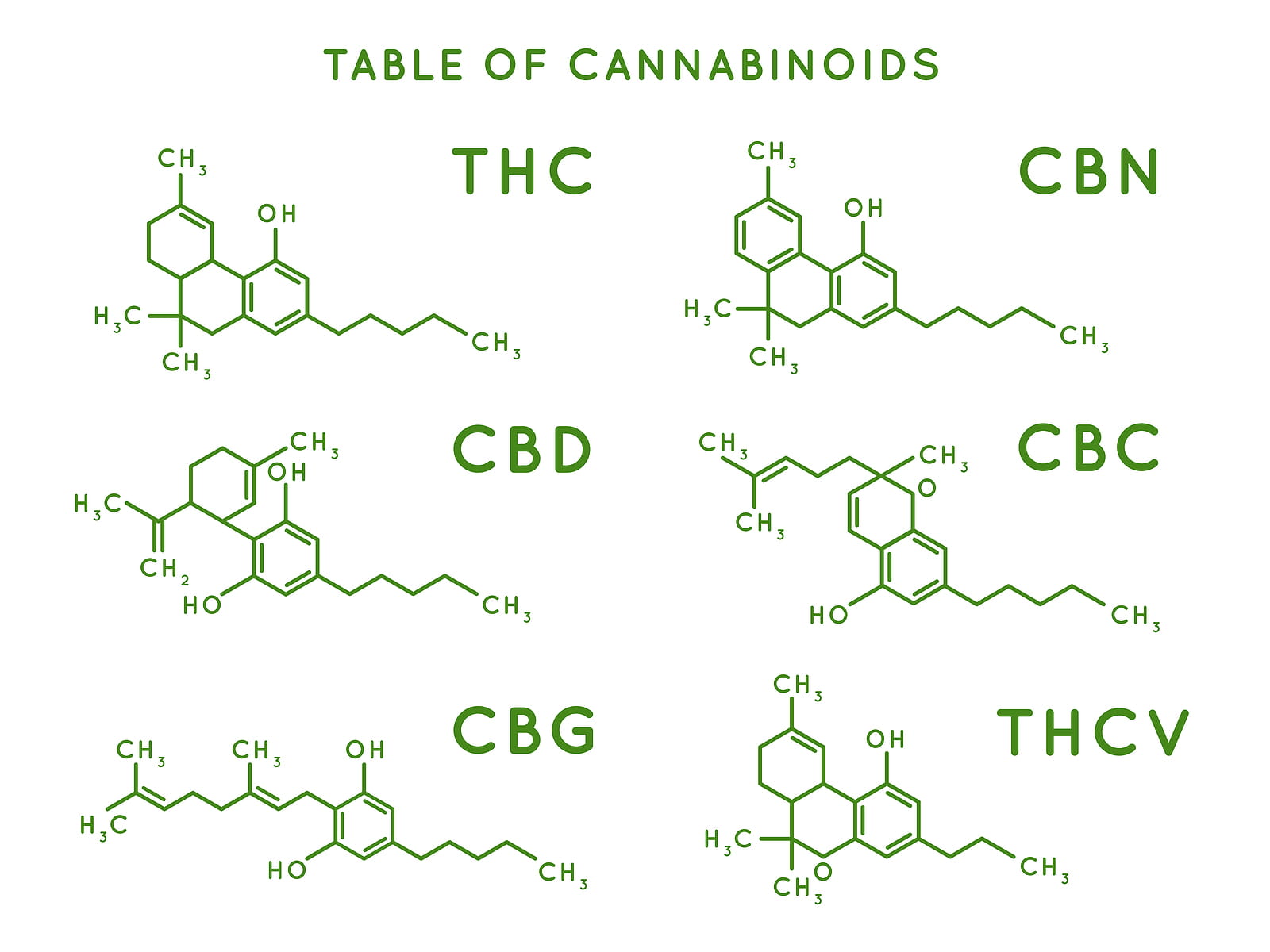
Does Higher TAC Mean Stronger?
Not directly. TAC tells you total cannabinoids, not effect. THC is still the main driver of intoxication. A higher TAC with a lot of CBD or CBG won’t hit harder than a pure-THC product at the same THC percentage. It just has more going on. For some people, that “more going on” matters. The blend of cannabinoids changes the experience subtly, which is part of why two strains with identical THC numbers can feel different. Terpenes play a role too, but that’s a different conversation.
Why is TAC always higher than THC? Because it’s adding all the other cannabinoids on top of THC.
Does TAC predict the experience? Partially. It tells you the cannabinoid profile is richer than just THC, but it doesn’t predict the feel by itself. Terpene profile matters too.
How to Read a Label Like a Pro
Look at the test results section on any Washington-tested cannabis product. You’ll typically see:
- THCa and Delta-9 THC (the active and pre-active forms)
- CBDa and CBD
- Other detected cannabinoids like CBG, CBN, CBC, THCV
- TAC as the rolled-up total
If you want to track minor cannabinoids specifically, look at the individual breakdown rather than just TAC. TAC is the headline number, but the detail underneath is where you find the real character of the strain.
Should I shop by TAC? Not exclusively. Use it as one data point. The strain, terpene profile, and your tolerance all matter more than a single number on the label.
Stop By and We’ll Walk You Through It
If you want help picking a strain based on the full cannabinoid profile, that’s literally what our budtenders do all day. Tell us what you’re looking for and we’ll match you with something that fits.
Two easy ways to shop:
Or stop by any of our three Spokane-area shops.
Read TAC and Shop with Cannabis & Glass
Cannabis & Glass is a locally owned, WSLCB-licensed dispensary with stores in Spokane Valley, Spokane North, and Liberty Lake. Our budtenders can walk you through TAC, THC, and minor cannabinoid percentages on any product on the menu.